

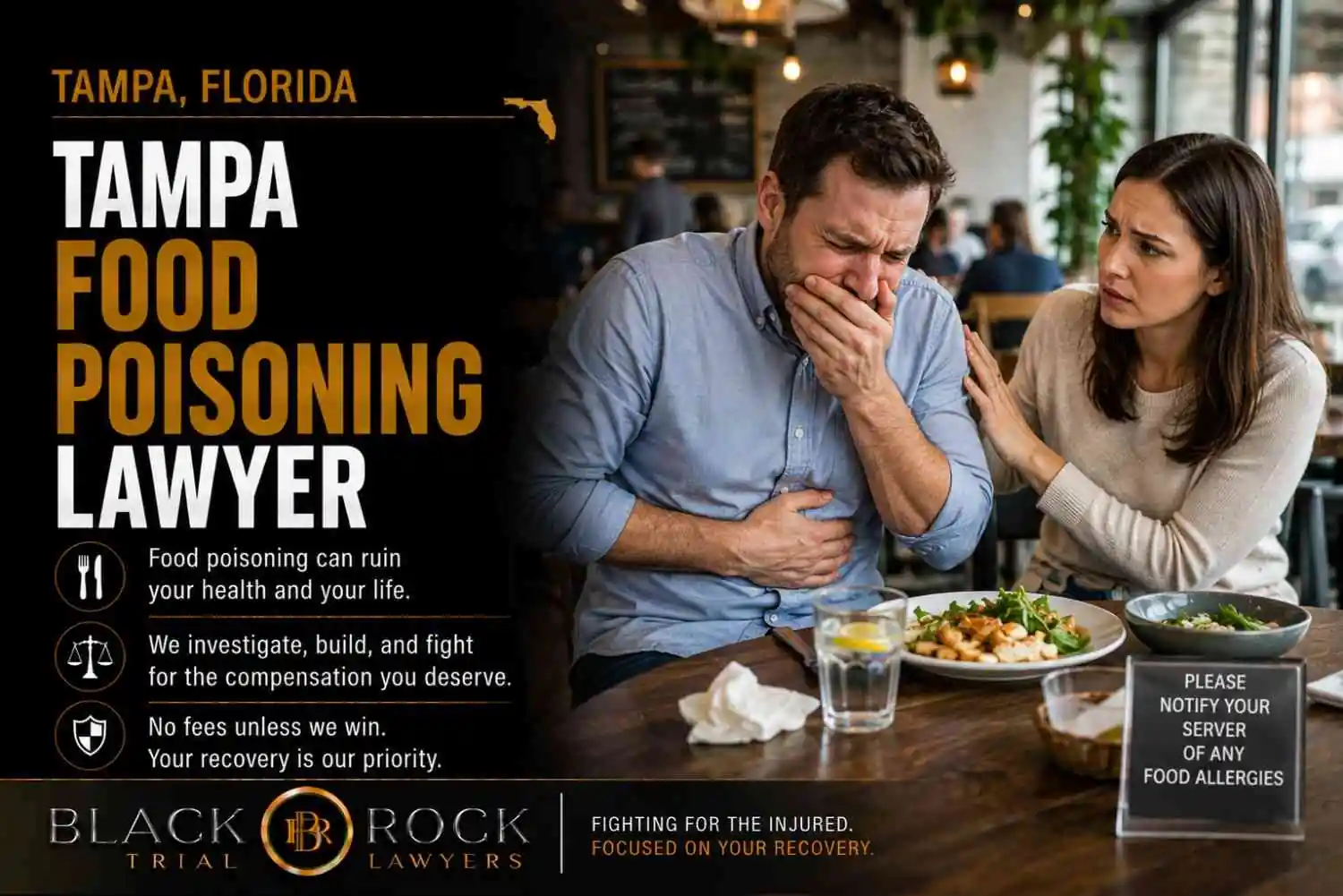
Tampa Food Poisoning Lawyer
You are not alone.
After a serious food poisoning incident, the physical illness, emotional distress, medical expenses, and financial stress can quickly become overwhelming.
While you focus on healing and recovery, our team works aggressively to protect your rights, investigate unsafe food handling practices, and pursue the full compensation you deserve.
Food poisoning claims are often strongly disputed by restaurants, grocery stores, food manufacturers, businesses, and insurance companies, but we are prepared to stand firm, fight back, and take your case to trial if fairness is denied.

Legal Content Reviewed By:
Gil Sanchez, Esq. | CEO | Senior Managing Partner
Black Rock Trial Lawyers, PLLC
Practicing Law in Florida’s State and Federal Courts since 2004
” Serving Tampa, Hillsborough County, and surrounding areas “
FOR YOU 24 / 7
Why Hire Black Rock Trial Lawyers
for a Tampa Food Poisoning Lawyer Case
- You Are Not a Case Number Here
We understand that serious food poisoning can cause painful illness, hospitalization, emotional distress, lost income, and overwhelming financial pressure for victims and their families. - Food Poisoning Cases Often Require Immediate Investigation
Contaminated food, restaurant records, inspection reports, surveillance footage, and other important evidence may disappear quickly after a food poisoning incident. - We Investigate Unsafe Food Handling Practices
Our team investigates contaminated food, improper food storage, undercooked food, cross-contamination, sanitation violations, unsafe preparation practices, and food safety failures. - We Move Quickly to Preserve Critical Evidence
Important evidence such as receipts, food samples, inspection reports, witness statements, medical records, surveillance footage, and health department findings may become difficult to obtain over time. - We Hold Negligent Businesses Accountable
Restaurants, grocery stores, hotels, catering companies, food manufacturers, distributors, and other businesses may be legally responsible when unsafe food causes serious illness. - We Understand Florida Food Poisoning and Premises Liability Law
Food poisoning claims may involve complicated issues regarding negligence, product liability, food safety regulations, comparative fault, corporate responsibility, and insurance disputes. - We Handle Your Case Like It Was Our Own Family
We approach every food poisoning injury case with the same care, seriousness, and dedication we would want for our own loved ones. - Compassion First. Trial-Ready Always.
We care deeply about what our clients are experiencing, but we also prepare every case aggressively to challenge businesses, corporations, insurance companies, and negligent parties. - We Deal Directly With Insurance Companies
Our team handles investigations, negotiations, communications, and legal disputes so you can focus on treatment and recovery. - We Evaluate the Full Impact of the Illness
Serious food poisoning may cause hospitalization, dehydration, organ damage, infections, long-term digestive complications, emotional trauma, and lost income. We work to fully document those damages. - We Work With Experts When Necessary
Food poisoning claims may require medical experts, food safety specialists, epidemiologists, investigators, and other professionals to properly evaluate liability and damages. - We Prepare Every Case for Trial
Although some food poisoning claims settle, we prepare every case as though it may ultimately go before a jury if fairness is denied. - Faith, Purpose, and Relentless Advocacy
Our work is guided by the belief that injured people deserve justice, accountability, and strong legal protection during some of the most difficult moments of their lives.
What We Do for You After a Tampa Food Poisoning Lawyer
- Investigate how the food poisoning incident happened
- Preserve receipts, food samples, surveillance footage, inspection reports, and other critical evidence before it disappears
- Review medical records, laboratory results, health department findings, witness statements, and available evidence
- Investigate unsafe food handling, improper storage, cross-contamination, sanitation violations, undercooked food, and food safety failures
- Determine whether restaurants, grocery stores, food manufacturers, hotels, caterers, distributors, or other businesses may be legally responsible
- Identify all available insurance coverage and responsible parties
- Communicate directly with insurance companies, corporate representatives, restaurants, and defense attorneys
- Protect you from unfair blame under Florida comparative fault laws
- Track hospitalization, medical treatment, testing, medications, rehabilitation, and future medical needs
- Work with food safety experts, medical specialists, epidemiologists, and investigators when necessary
- Document the full impact of the illness including physical suffering, emotional distress, lost income, and long-term health complications
- Calculate both economic and non-economic damages related to the food poisoning incident
- Prepare and send detailed settlement demands supported by evidence and medical documentation
- Negotiate aggressively with insurance companies and businesses for a fair settlement
- File a lawsuit if necessary and appropriate to pursue full compensation
- Prepare every food poisoning case as though it may ultimately go to trial if fairness is denied
Hurt in a Tampa Food Poisoning ? You Are Not Alone.
After a serious food poisoning incident, life can suddenly become overwhelming. Severe illness, dehydration, hospitalization, missed work, emotional distress, and financial pressure can affect nearly every part of your daily life and your family’s stability.
Whether the food poisoning happened at a restaurant, grocery store, hotel, catered event, food truck, workplace cafeteria, resort, or another business in Tampa or Hillsborough County, our team is here to help you move forward.
At Black Rock Trial Lawyers, we understand that food poisoning claims are often aggressively disputed by restaurants, food manufacturers, grocery stores, hotels, corporations, and insurance companies. Businesses may deny contamination occurred, argue another source caused the illness, or attempt to minimize the seriousness of the injuries and long-term complications.
We move quickly to investigate the incident, preserve receipts, food samples, surveillance footage, inspection records, laboratory testing, medical records, and health department findings before important evidence disappears.
Florida law gives injured victims only a limited amount of time to pursue a claim, which is why acting quickly after a food poisoning incident can be extremely important. Delays may allow evidence, witness memories, and critical records to disappear.
Our team works aggressively to pursue compensation for medical bills, hospitalization, lost wages, pain and suffering, emotional distress, long-term digestive complications, organ damage, and other damages caused by contaminated or unsafe food.
We work to resolve food poisoning claims as efficiently as possible, but we will not allow businesses or insurance companies to pressure injured victims into unfair settlements. If fairness is denied, we are fully prepared to file suit, take the case to trial, and fight for the justice and compensation you deserve.
Florida Food Poisoning Lawyer Law
A. Florida Food Poisoning and Negligence Law
Under Florida law, restaurants, grocery stores, hotels, food manufacturers, catering companies, distributors, and other businesses may have a legal duty to provide reasonably safe food for consumers. When contaminated food, unsafe food handling, poor sanitation, improper storage, or negligence causes illness, injured victims may have the right to pursue compensation.
B. Product Liability and Unsafe Food Claims
Food poisoning claims may involve product liability issues when contaminated, defective, improperly prepared, or unsafe food products cause illness or injury. Liability may extend to restaurants, manufacturers, distributors, suppliers, food processors, or other businesses involved in the food supply chain.
C. Comparative Fault
Florida follows a modified comparative negligence system, meaning compensation may be reduced by the injured person’s percentage of fault. However, if a person is found more than 50% responsible for their injuries, recovery may generally be barred in many negligence claims. Businesses and insurance companies may attempt to argue another source caused the illness. See Fla. Stat. § 768.81(6).
D. Statute of Limitations
For most Florida food poisoning negligence claims, the deadline to file a lawsuit is generally two years. However, important evidence such as food samples, receipts, surveillance footage, inspection reports, witness statements, and laboratory testing may disappear quickly after the incident. See Fla. Stat. § 95.11(5).
Press Release



Common Tampa Food Poisoning Scenarios We Handle
Restaurant Food Poisoning Incidents
Food poisoning frequently occurs at restaurants because of undercooked food, poor sanitation, cross-contamination, expired ingredients, or unsafe food handling practices.
Grocery Store and Supermarket Contamination Cases
Contaminated meat, produce, dairy products, seafood, deli items, or packaged foods sold by grocery stores may cause widespread illness and serious health complications.
Hotel and Resort Food Poisoning
Guests at hotels and resorts may suffer food poisoning because of contaminated buffet food, unsafe kitchen conditions, improper food storage, or negligent food preparation.
Food Truck and Street Vendor Food Poisoning
Improper refrigeration, poor sanitation, contaminated ingredients, and unsafe cooking conditions at food trucks or street vendors may lead to serious illness.
Catering and Event Food Poisoning
Food poisoning outbreaks may happen at weddings, corporate events, parties, conferences, or catered events involving improperly prepared or contaminated food.
Salmonella Food Poisoning Cases
Salmonella infections may result from contaminated poultry, eggs, meat, produce, dairy products, or improperly prepared food.
E. Coli Food Poisoning Cases
E. coli outbreaks may cause severe gastrointestinal illness, dehydration, kidney complications, and hospitalization after consuming contaminated food or beverages.
Listeria Contamination Cases
Listeria contamination may create especially dangerous risks for pregnant women, newborns, elderly individuals, and people with weakened immune systems.
Seafood and Shellfish Poisoning
Contaminated seafood, raw oysters, sushi, shellfish, or improperly stored fish may cause severe bacterial infections and foodborne illness.
Norovirus Outbreak Cases
Norovirus outbreaks may spread rapidly through restaurants, cruise ships, hotels, schools, nursing homes, or other locations involving food service and close public contact.
Common Injuries After a Tampa Food Poisoning Accident
- Severe stomach pain and cramping
- Nausea and vomiting
- Severe diarrhea
- Bloody stool complications
- Dehydration injuries
- High fever and infections
- Foodborne bacterial infections
- Salmonella infections
- E. coli infections
- Listeria infections
- Norovirus infections
- Kidney damage and kidney failure
- Liver damage complications
- Internal organ damage
- Digestive system complications
- Chronic gastrointestinal disorders
- Irritable bowel syndrome (IBS)
- Malnutrition complications
- Sepsis and bloodstream infections
- Neurological complications
- Brain inflammation complications
- Paralysis-related complications
- Pregnancy complications
- Birth injury complications from infections
- Compromised immune system complications
- Hospitalization and emergency treatment
- Long-term digestive problems
- Chronic pain and physical weakness
- Psychological trauma and emotional distress
- Anxiety and depression
- Wrongful death claims
What Compensation May Be Available
- Past medical bills
Emergency room treatment, hospitalization, diagnostic testing, medications, IV fluids, specialist care, rehabilitation, and other food poisoning-related medical expenses. - Future medical care
Future treatment, specialist care, gastrointestinal treatment, rehabilitation, nutritional therapy, long-term medical monitoring, and ongoing healthcare needs related to the illness. - Lost wages
Income lost because your food poisoning illness prevented you from working during recovery. - Loss of earning capacity
Compensation when long-term health complications, chronic digestive conditions, organ damage, or disabilities affect your future ability to work or earn income. - Pain and suffering
Physical pain, severe discomfort, stomach complications, chronic illness symptoms, and the daily impact of living with serious food poisoning injuries. - Mental anguish and emotional distress
Anxiety, emotional trauma, depression, fear, embarrassment, and psychological suffering caused by the illness and its complications. - Loss of enjoyment of life
The inability to participate in hobbies, travel, social activities, family events, or normal routines because of food poisoning complications and physical limitations. - Permanent disability or impairment
Compensation for long-term digestive disorders, kidney damage, organ damage, neurological complications, weakened immune system issues, or permanent health impairments. - Hospitalization and intensive care damages
Compensation related to ICU treatment, emergency medical intervention, prolonged hospitalization, or severe infection complications. - Out-of-pocket expenses
Transportation costs, prescription medications, nutritional supplements, medical equipment, home care, and other food poisoning-related expenses. - Household services and daily assistance
The cost or value of help with childcare, transportation, cooking, cleaning, shopping, and household tasks during recovery. - Loss of consortium or companionship
Damages that may apply when serious illness negatively affects a spouse’s relationship, companionship, emotional support, or marital life. - Loss of quality of life
The broader impact of serious illness on independence, emotional well-being, work life, family relationships, and future opportunities. - Long-term gastrointestinal complication damages
Compensation for chronic digestive disorders, IBS, recurring illness symptoms, nutritional complications, or permanent gastrointestinal conditions caused by food poisoning. - Wrongful death damages
In fatal food poisoning cases, surviving family members may be entitled to compensation for funeral expenses, medical bills, loss of support, companionship, and mental pain and suffering. - Future loss of support or services
In wrongful death cases, surviving family members may pursue compensation for the future financial support, care, guidance, and services their loved one would have provided.
What to Do After a Tampa Food Poisoning Accident
- Seek medical attention immediately especially if you are experiencing severe vomiting, dehydration, bloody stool, high fever, difficulty breathing, or worsening symptoms.
- Follow all recommended medical treatment including testing, medications, hospitalization, specialist care, hydration treatment, and follow-up appointments.
- Preserve receipts and proof of purchase from restaurants, grocery stores, food delivery services, catered events, or any location connected to the contaminated food.
- Save leftover food and packaging if possible because food samples, containers, labels, and packaging may become important evidence.
- Document your symptoms and recovery including pain levels, illness progression, missed work, hospitalization, medical treatment, and emotional distress.
- Take photographs and videos of the food, packaging, visible contamination, medical treatment, prescriptions, or hospitalization if appropriate.
- Identify potential witnesses including other people who ate the same food or became ill after consuming the same products.
- Report the incident to the restaurant, business, grocery store, hotel, or other responsible party if appropriate.
- Consider reporting the illness to health authorities because food poisoning outbreaks may affect multiple victims and public health investigations may become important evidence.
- Keep records of medical expenses and lost income related to the food poisoning illness and recovery process.
- Avoid discussing the claim on social media because businesses and insurance companies may monitor public statements during the investigation process.
- Be careful speaking with insurance companies or corporate representatives because they may attempt to minimize your illness or dispute where the contamination occurred.
- Do not give recorded statements to insurance adjusters, restaurants, corporations, or defense representatives before receiving legal advice.
- Avoid accepting a quick settlement before understanding the full extent of your medical condition, future treatment needs, or long-term complications.
- Contact Black Rock Trial Lawyers early so we can investigate the food poisoning incident, preserve critical evidence, protect your rights, and pursue the compensation you deserve.
Feedback From Valued Clients











OUR TEAM BECOMES YOURS
You deserve a team that treats your case with the same care, prayerful attention, and seriousness we would want for our own family.

Gil Sanchez, Esq.

Monica A. Sanchez

Hector González, FRP

Steven A. Capriati, Esq.

Jennifer Elias
Why Insurance Companies Dispute Tampa Food Poisoning Accident Claims
- They may argue the illness came from another source instead of the restaurant, grocery store, hotel, food product, or business involved in the claim.
- They may deny the food was contaminated even when unsafe food handling, poor sanitation, improper storage, or health code violations existed.
- They may claim there is not enough evidence connecting the contaminated food to the illness or outbreak.
- They may dispute the seriousness of the illness even though food poisoning can cause hospitalization, organ damage, long-term digestive complications, and severe infections.
- They may argue pre-existing medical conditions caused the symptoms instead of acknowledging the food poisoning incident caused or worsened the condition.
- They may challenge laboratory results or medical findings in an effort to dispute liability or reduce compensation.
- They may dispute future medical treatment by arguing long-term digestive care, specialist treatment, rehabilitation, or follow-up treatment is unnecessary.
- They may minimize emotional distress and suffering including anxiety, emotional trauma, embarrassment, and the psychological impact of serious illness.
- They may dispute lost wages and future earning capacity by questioning whether the illness truly affected the victim’s ability to work.
- They may shift blame between multiple businesses or suppliers such as restaurants, food distributors, manufacturers, suppliers, or grocery stores.
- They may delay investigations and settlement negotiations while medical bills, lost income, and financial pressure continue to increase.
- They may request recorded statements and later attempt to use your own words against you during the claim process.
- They may offer a quick settlement before the full extent of long-term medical complications, organ damage, digestive disorders, or future treatment needs is fully understood.
10 FAQs After a Florida Food Poisoning Accident or Personal Injury Claim
1. What is a food poisoning claim in Florida?
A food poisoning claim generally arises when someone becomes seriously ill because of contaminated food, unsafe food handling, poor sanitation, improper food storage, defective food products, or negligence by a restaurant, grocery store, hotel, caterer, manufacturer, or other business.
2. How long do I have to file a food poisoning lawsuit in Florida?
For most Florida food poisoning negligence claims, the deadline to file a lawsuit is generally two years. However, important evidence such as food samples, receipts, surveillance footage, inspection reports, and laboratory testing may disappear quickly after the incident. See Fla. Stat. § 95.11(5).
3. What compensation may be available after a food poisoning incident?
Depending on the facts of the case, compensation may include medical bills, hospitalization costs, lost wages, future medical treatment, pain and suffering, emotional distress, organ damage, digestive complications, disability damages, and wrongful death damages where applicable.
4. What types of food poisoning cases are common?
Common food poisoning claims may involve Salmonella, E. coli, Listeria, Norovirus, contaminated seafood, undercooked food, cross-contamination, spoiled food, unsanitary kitchen conditions, or contaminated food products.
5. Can I still recover compensation if I was partly at fault?
Maybe. Florida follows a modified comparative negligence system, meaning compensation may be reduced by your percentage of fault. However, if you are found more than 50% responsible for your injuries, recovery may generally be barred in many negligence cases. See Fla. Stat. § 768.81(6).
6. Why are food poisoning cases often serious?
Food poisoning can cause severe dehydration, hospitalization, organ damage, kidney failure, neurological complications, bloodstream infections, long-term digestive disorders, pregnancy complications, and even wrongful death in severe cases.
7. Why do insurance companies dispute food poisoning claims?
Insurance companies often argue the illness came from another source, dispute contamination evidence, minimize the seriousness of the illness, challenge medical findings, or shift blame between businesses involved in the food supply chain.
8. What evidence is important after a food poisoning incident?
Important evidence may include receipts, food packaging, leftover food samples, medical records, laboratory testing, photographs, witness statements, inspection reports, health department findings, and proof of where the food was purchased or consumed.
9. Should I speak with the insurance company after a food poisoning incident?
You should be careful before giving recorded statements or discussing your illness with insurance adjusters, restaurants, or corporate representatives because your statements may later be used to dispute liability or minimize your injuries.
10. How much does it cost to hire Black Rock Trial Lawyers?
Black Rock Trial Lawyers handles food poisoning and personal injury claims on a contingency fee basis, meaning you do not pay attorney’s fees unless we recover compensation for you. We also explain the legal process and fee agreement clearly from the beginning.
Speak With a Tampa Food Poisoning Lawyer Today
Our Blogs





Legal Content Reviewed By:
Gil Sanchez, Esq.
CEO | Senior Managing Partner
Black Rock Trial Lawyers, PLLC
Practicing Law in Florida’s State and Federal Courts since 2004.