
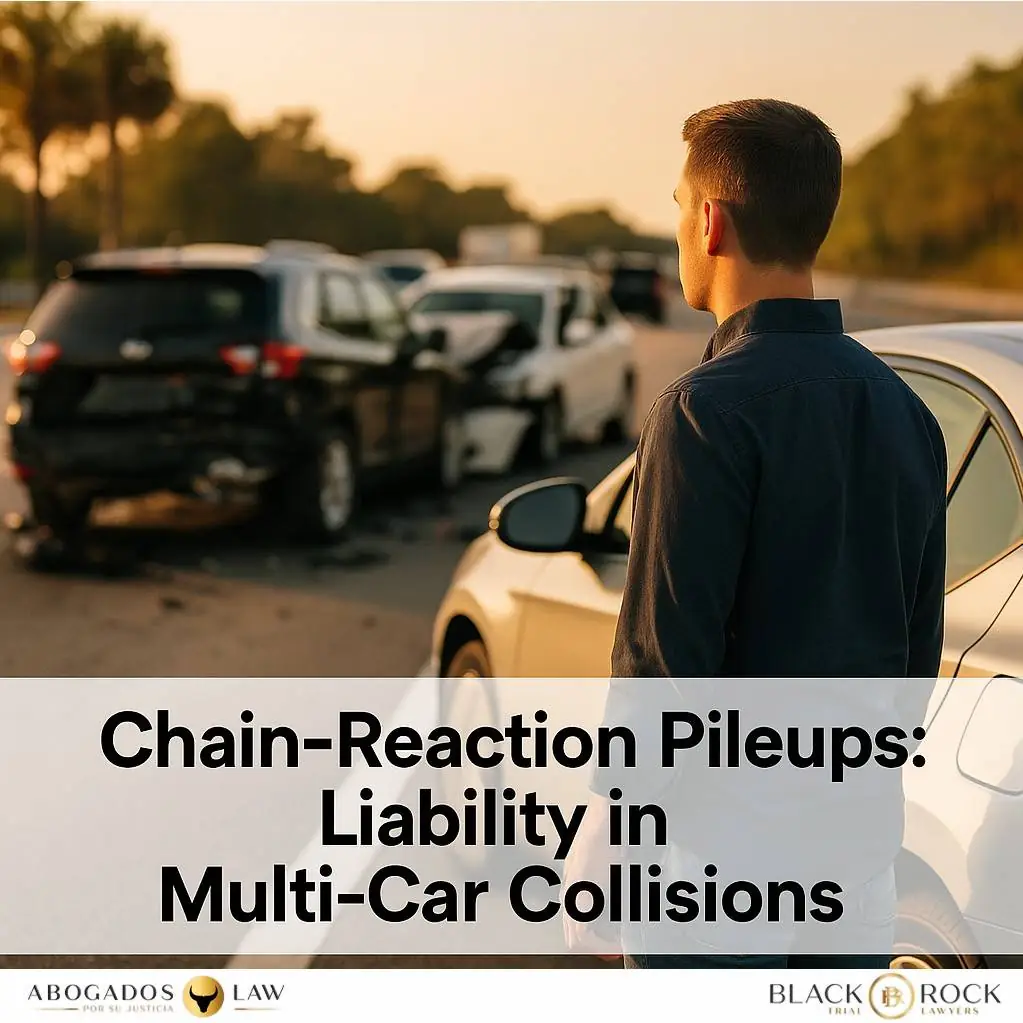
Chain-reaction pileups on I‑4 and I‑95 are among the most complex traffic accidents in Florida. When multiple vehicles collide in quick succession, sorting out who is legally responsible can be challenging. You need to understand how Florida law approaches these situations to protect your rights and interests.
**How Liability Is Determined**
Florida uses a comparative negligence system, meaning each driver’s actions are evaluated to determine their share of fault. In a multi-car collision, liability may be divided among several parties. Factors such as following too closely, distracted driving, or sudden stops are considered. Police reports, witness statements, and accident scene evidence are critical in establishing who contributed to the pileup.
**Comparative Negligence and Your Recovery**
Under Florida law, your compensation may be reduced by your percentage of fault. For example, if you are found 20% at fault, your recovery is reduced accordingly. You should gather all available evidence and consult with a personal injury attorney to ensure your interests are represented.
**Practical Steps After a Chain-Reaction Accident**
You should document the scene, seek medical attention, and report the accident to authorities. Our firm recommends contacting a Florida personal injury lawyer promptly to help navigate insurance claims and liability disputes. Acting quickly can make a significant difference in your case.
Disclaimer: This content is for informational purposes only and does not constitute legal advice, and laws and legal interpretations may change after the date of publication.
Written by:
Gil Sánchez, Esq.
CEO | Civil Trial Attorney
Black Rock Trial Lawyers
Abogados Law