
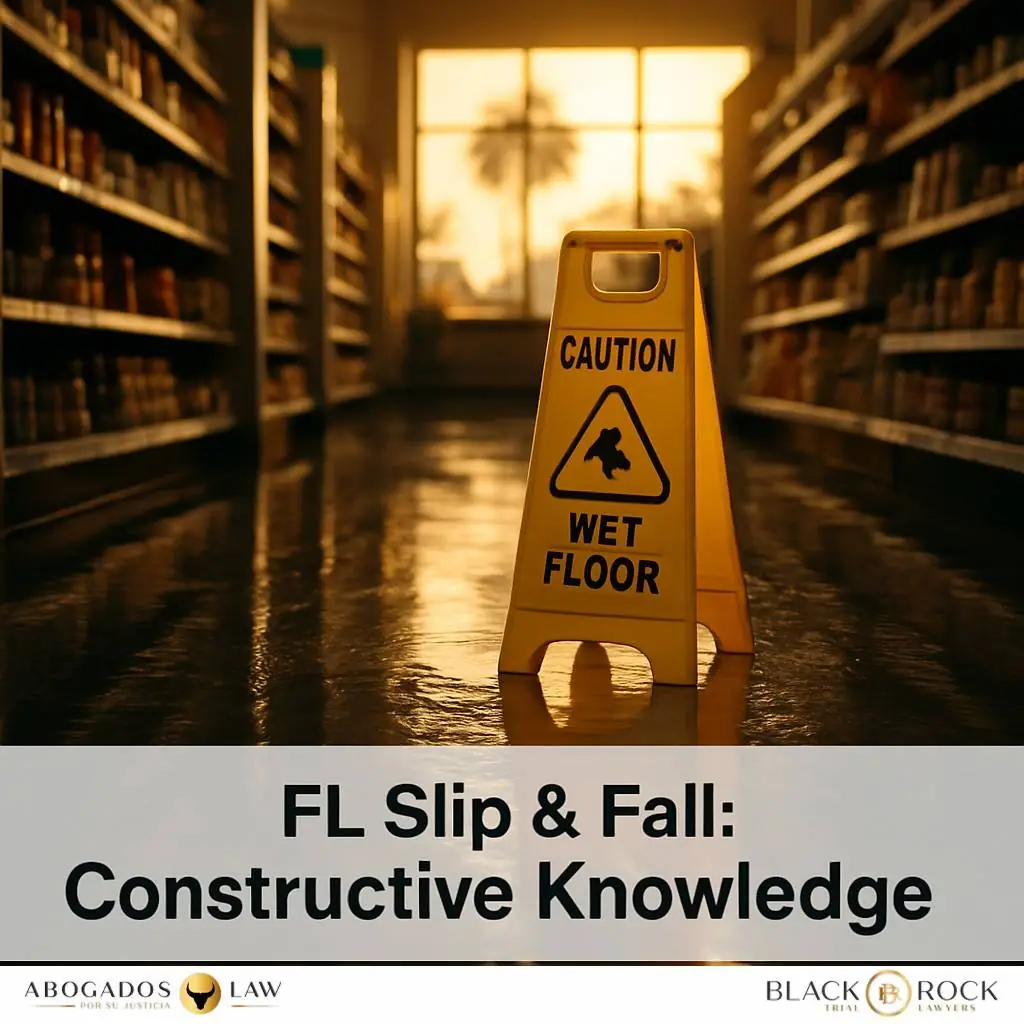
Slip and fall accidents in Florida aren’t always about what a property owner actually knew. The law recognizes ‘constructive knowledge’—meaning a business can be held liable if a dangerous condition existed long enough that it should have been discovered, or if it happened so regularly that it was foreseeable. This standard is crucial for victims who never saw an employee witness the hazard but still suffered serious injuries.
Florida Statute § 768.0755 governs these cases. To win, you must prove the property owner had actual or constructive knowledge of the dangerous condition and failed to take action. Constructive knowledge can be shown by evidence that the hazard was present for such a length of time that it should have been discovered, or that the condition occurred with regularity and was therefore foreseeable. For example, a puddle in a grocery store aisle that remains for hours, or repeated spills in the same spot, can establish constructive knowledge. Courts have reinforced this in cases like Pembroke Lakes Mall Ltd. v. McGruder, where patterns of recurring hazards played a key role.
Timing is everything. Florida’s statute of limitations for personal injury claims is just two years. Many people lose their right to compensation by waiting too long or failing to document the scene. If you’re injured in a slip and fall, take photos, report the incident immediately, and seek legal guidance. Our firm stands ready to help you navigate these complex claims and protect your rights.
☎️ Schedule a Legal Consult
📲Call/Text 24/7: 813-254-1777
🌎personalinjury.blackrocklaw.com
Disclaimer: This content is for informational purposes only and does not constitute legal advice, and laws and legal interpretations may change after the date of publication.
Written by:
Gil Sánchez, Esq.
CEO | Civil Trial Attorney
Black Rock Trial Lawyers
Abogados Law